

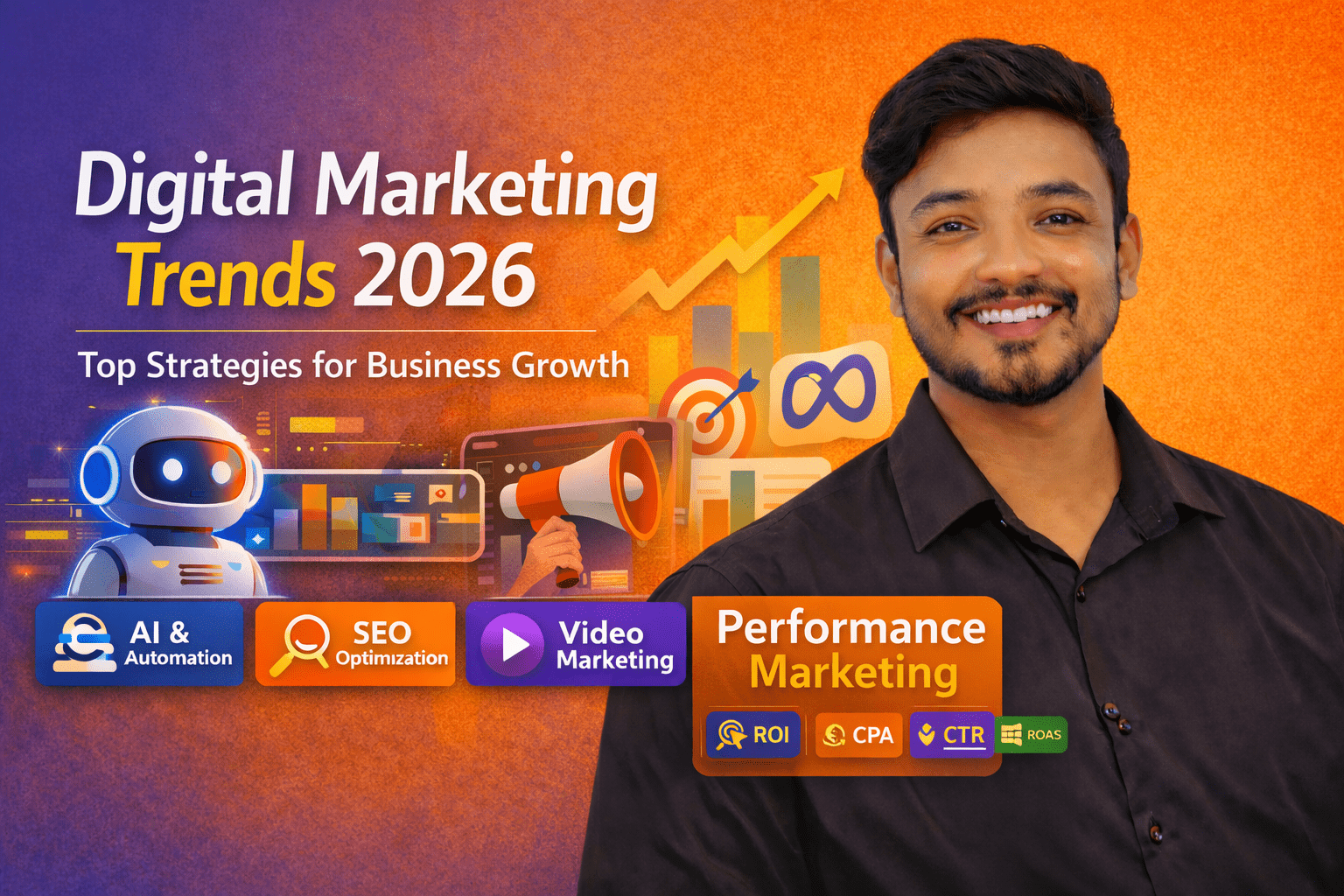
The digital marketing landscape is evolving faster than ever. With artificial intelligence, automation, privacy regulations, and smarter ad platforms reshaping the industry, businesses must stay updated to remain competitive. In 2026, brands that adapt quickly will dominate search results, social media visibility, and paid advertising performance.
In this guide, we explore the latest digital marketing trends in 2026, practical strategies, and how businesses can use them to increase leads, sales, and brand authority.
Why Digital Marketing Trends Matter in 2026
Consumer behavior has changed dramatically. People now expect:
Personalized experiences
Faster website performance
Relevant ads
Trust and data privacy
Google, Meta, and AI-driven platforms are prioritizing automation, machine learning, and intent-based targeting. Ignoring these trends can reduce your visibility and marketing ROI.
- Artificial Intelligence Will Power Every Campaign
AI is becoming the backbone of digital marketing. From ad bidding to creative optimization, AI tools help marketers:
Predict customer behavior
Automate keyword bidding
Generate ad creatives
Optimize landing pages
Analyze campaign performance
Google Performance Max and Meta Advantage+ campaigns already rely heavily on AI algorithms.
Action Tip: Use AI tools for copywriting, CRO testing, predictive analytics, and reporting automation.
- Performance Marketing Will Become Hyper-Optimized
Businesses are focusing on measurable results instead of brand-only campaigns. Performance marketing channels include:
Google Search Ads
Performance Max campaigns
Meta conversion ads
Marketplace ads (Amazon, Flipkart)
Advanced tracking using GA4, Google Tag Manager, server-side tracking, and CRM integrations improves attribution accuracy and ROI optimization.
Track metrics like CPA, ROAS, LTV, conversion rate, and funnel performance.
- SEO Will Focus on Experience, Not Just Keywords
SEO in 2026 is centered around:
Helpful and authoritative content
Core Web Vitals (speed, stability, UX)
Mobile-first indexing
Structured data & schema
Voice and AI search optimization
Search engines prioritize content that solves user intent rather than keyword stuffing.
Optimize content for readability, FAQs, internal linking, and topical authority.
- Short-Form Video Will Dominate Engagement
Video continues to outperform static content across platforms:
YouTube Shorts
Instagram Reels
Facebook Video Ads
OTT and Connected TV
Short videos build trust, increase brand recall, and improve conversion rates.
Focus on storytelling, hooks in the first 3 seconds, and strong CTAs.
- First-Party Data Will Become the New Gold
With third-party cookies disappearing, businesses must rely on:
Email databases
CRM systems
WhatsApp marketing
Loyalty programs
Website remarketing audiences
First-party data improves targeting accuracy and reduces ad costs.
- Marketing Automation Will Drive Scalability
Automation tools help businesses:
Nurture leads automatically
Manage CRM workflows
Send personalized campaigns
Generate reports
Run chatbots
This improves efficiency and reduces operational costs.
- Programmatic Advertising Will Expand Rapidly
Programmatic advertising enables automated media buying across:
Display networks
Video platforms
Native ads
Connected TV
AI-driven bidding improves targeting accuracy and reduces wastage.
- Omnichannel Marketing Will Become Mandatory
Customers interact with brands across multiple touchpoints:
Search
Social media
Website
Marketplaces
Integrated messaging and consistent branding improve conversions.
Final Thoughts
The future of digital marketing in 2026 is driven by AI automation, performance analytics, privacy-first data, and user experience optimization. Businesses that invest in smart strategies will outperform competitors and achieve sustainable growth.
If you want to grow your brand online, focus on continuous learning, advanced analytics, and scalable automation.